
In the completely newly built, anaesthesiologist-led interdisciplinary intensive care and high-dependency unit with 16 beds, patients with life-threatening illnesses are monitored and treated with intensive care. The team, with its specialist training, guarantees the best possible care.
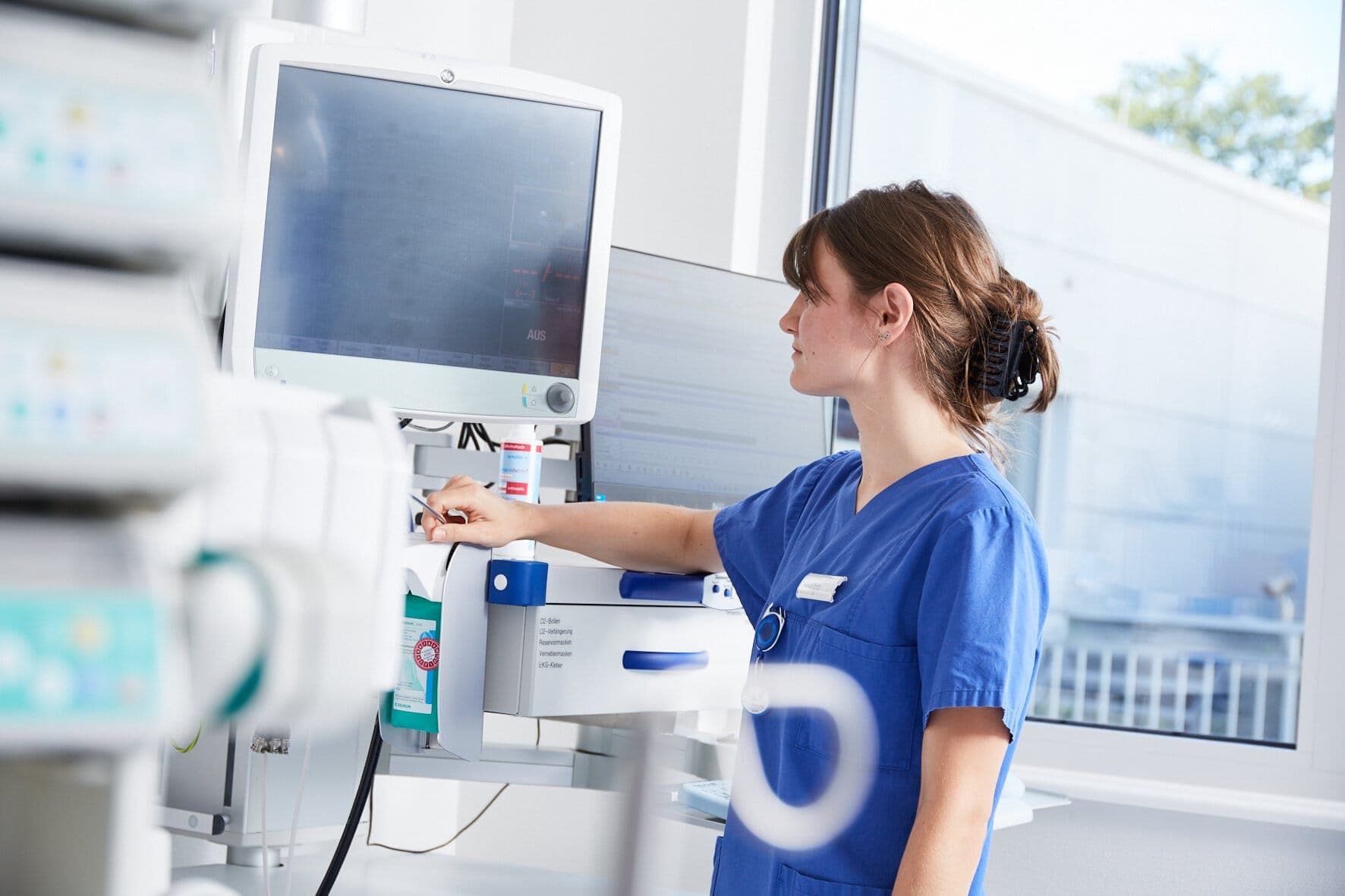
Intensive care unit
In addition to invasive and non-invasive ventilation options for all patients in the new intensive care unit, haemodialysis for kidney failure, dilatational tracheostomy for long-term ventilation and invasive circulatory monitoring using the PiCCO system for critically ill patients can be performed (known as extended haemodynamic monitoring). A modern integrated monitoring system enables goal-directed therapy while monitoring all important bodily functions.
Humane and compassionate support for critically ill patients and their relatives by doctors, nursing staff and chaplains is our highest priority.
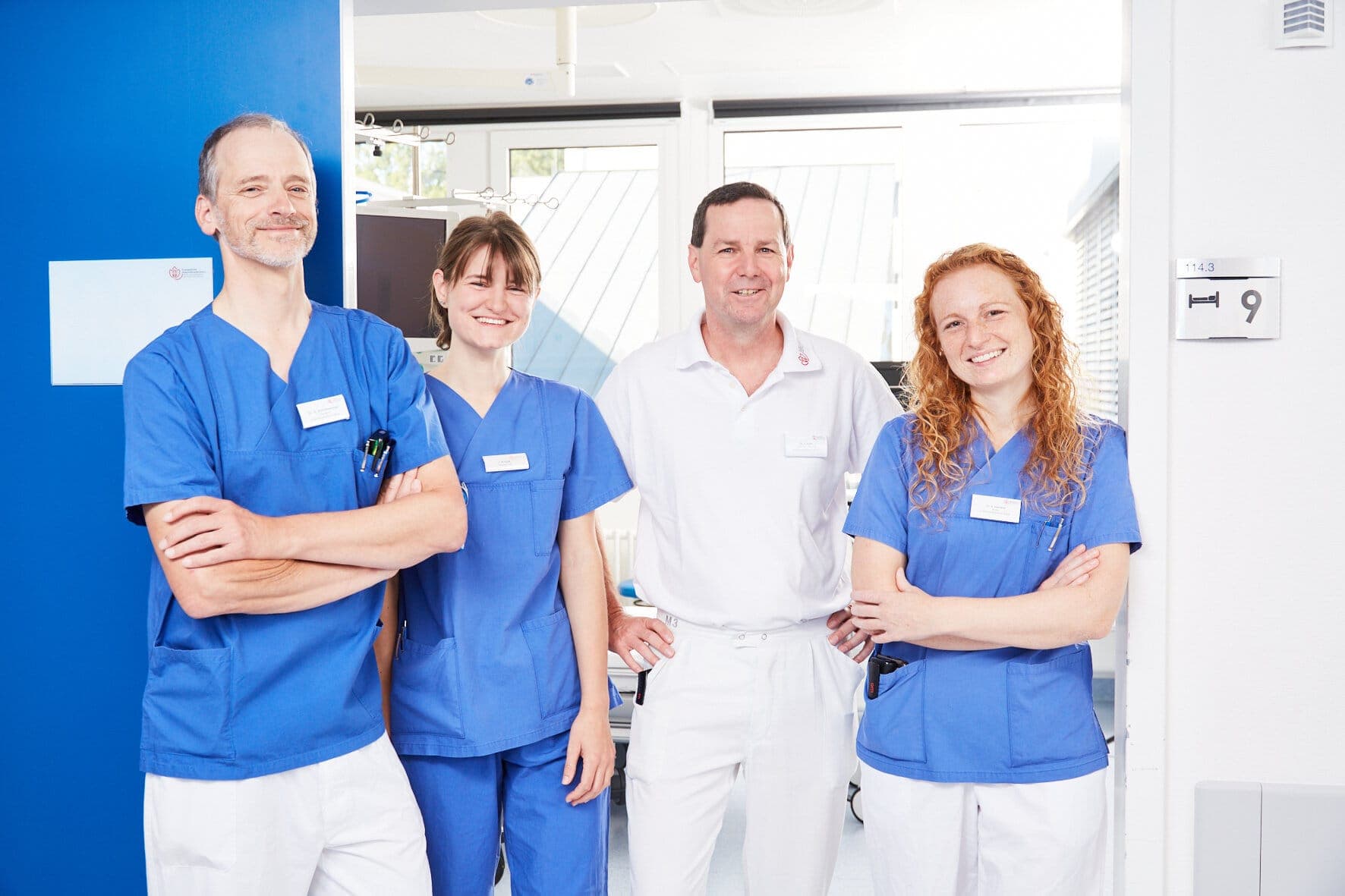
Intermediate care unit (IMC)
The intermediate care ward, with a total of seven beds, is part of the new concept for differentiated medical and nursing care of seriously ill and emergency patients in the region. It is intended for patients who do not require intensive care but who nevertheless need special monitoring. Admission criteria include conditions such as disorders of the cardiovascular system (cardiac arrhythmias, monitoring for suspected heart attack) or pulmonary function disorders (hyperventilation, respiratory failure, severe asthma, sleep apnoea syndrome), as well as close monitoring after major surgical procedures or in the case of life-threatening concomitant diseases.

Special procedures of the department
Special medical procedures are used in the department, such as extended haemodynamic monitoring by means of transpulmonary thermodilution and pulse contour analysis (PiCCO), continuous arterial pressure waveform analysis (Vigileo/FloTrac), or transthoracic (TTE) and transoesophageal echocardiography (TEE), as well as intermittent haemodialysis in acute kidney failure. In addition, large-bore dialysis catheters (Demers catheters) are implanted and also removed by the intensive care unit physicians on a consultation basis for the neighbouring dialysis practice. A tracheotomy (percutaneous dilatational tracheostomy), which is necessary for long-term ventilation, is also performed under bronchoscopic control by the team of the Department of Anaesthesiology.
Antibiotic Stewardship (ABS)
Antibiotic Stewardship (ABS) programmes in hospitals aim to continuously improve the quality of prescribing anti-infectives (particularly antibiotics) with regard to the choice of substances, dosage, route of administration and duration of use, in order to achieve the best clinical treatment outcomes while minimising side effects for patients as well as the development of resistance and costs. Accordingly, it is recommended to appoint ABS-designated doctors as contact persons, who are to work as a team across the whole hospital and across departments.
The Department of Anaesthesiology has been meeting this requirement for some time and trains its doctors accordingly, so that, with a rational medication regimen, it can continue to guarantee patients the necessary safety of antibiotic therapy in the future.
Last updated: