
Patient Blood Management (PBM)
Blood is a very precious fluid: in addition to vital oxygen, it transports cells, nutrients and toxins through our vessels, thus forming an important link between all organs. Blood donors give their blood to others and thereby make a valuable contribution to saving severely injured accident victims and to enabling major operations.
It is undisputed that giving blood in an acute emergency can save lives. However, it has now been established that an overly liberal use of this precious blood also carries risks. For example, the non-indicated administration of blood transfusions can be the cause of increased mortality and a higher complication rate (e.g. heart attack, kidney failure) and may be associated with an increased risk of infections
(e.g. pneumonia). Like any medicine, blood should therefore only be used where there is a clear indication and with awareness of its quite relevant side effects, since essentially every blood transfusion represents a small organ transplant.
Consequently, a change in thinking is required of all physicians who administer transfusions: instead of treating anaemia generously with blood transfusions, alternative strategies should be considered in order to avoid unnecessary blood transfusions in the context of surgical procedures. Modern and innovative regimes such as “Patient Blood Management” (PBM) describe a multidisciplinary treatment concept for reducing blood transfusions by detecting and treating anaemia before a surgical procedure, minimising blood loss during the operation and increasing anaemia tolerance after the operation.
Patient Blood Management focuses on the treatment of the individual patient and extends not only to the surgical field but applies to all specialties in which relevant blood loss can occur and in which blood products and their alternatives are part of the therapeutic approach. Our close cooperation with the laboratory is pioneering in this respect: for example, switching to smaller tubes (Monovettes) for blood sampling saves many litres of patient blood every year.
The main goal of implementing patient-centred PBM at the Evangelisches Diakoniekrankenhaus is to avoid blood transfusions that are not strictly necessary and to improve patients' prognosis. In doing so, we follow the long-standing call of the World Health Organization (WHO) for a more conscious use of blood. At the same time, the patient – whose individual safety and health should always come first – is placed at the centre of all our efforts.
Haemodynamic optimisation strategies in high-risk patients
High-risk surgical patients who have to undergo a major procedure not infrequently suffer perioperative complications because of their multiple pre-existing conditions. Most of these complications cause disproportionately high costs and also prolong the length of hospital stay.
In addition to basic anaesthetic monitoring, extended haemodynamic monitoring provides information on flow-, volume- or metabolism-related parameters of circulatory regulation, which, in combination with treatment protocols based on them, can be used to optimise volume status and oxygen delivery. Current studies show that early, target-oriented circulatory therapy (“goal-directed therapy”) in combination with extended haemodynamic monitoring can significantly reduce the complication rate and also mortality in this patient group.
Alongside a number of university hospitals, the Evangelisches Diakoniekrankenhaus was one of the first non-university hospitals in Germany to introduce a standardised haemodynamic optimisation protocol into clinical routine, and has done so for years. This procedure, which brings a clear survival benefit for predominantly elderly patients with serious pre-existing conditions, is an important contribution to greater patient safety in the surgical setting.
Prof. Wiesenack interviewed by the Badische Zeitung on 23 December 2019
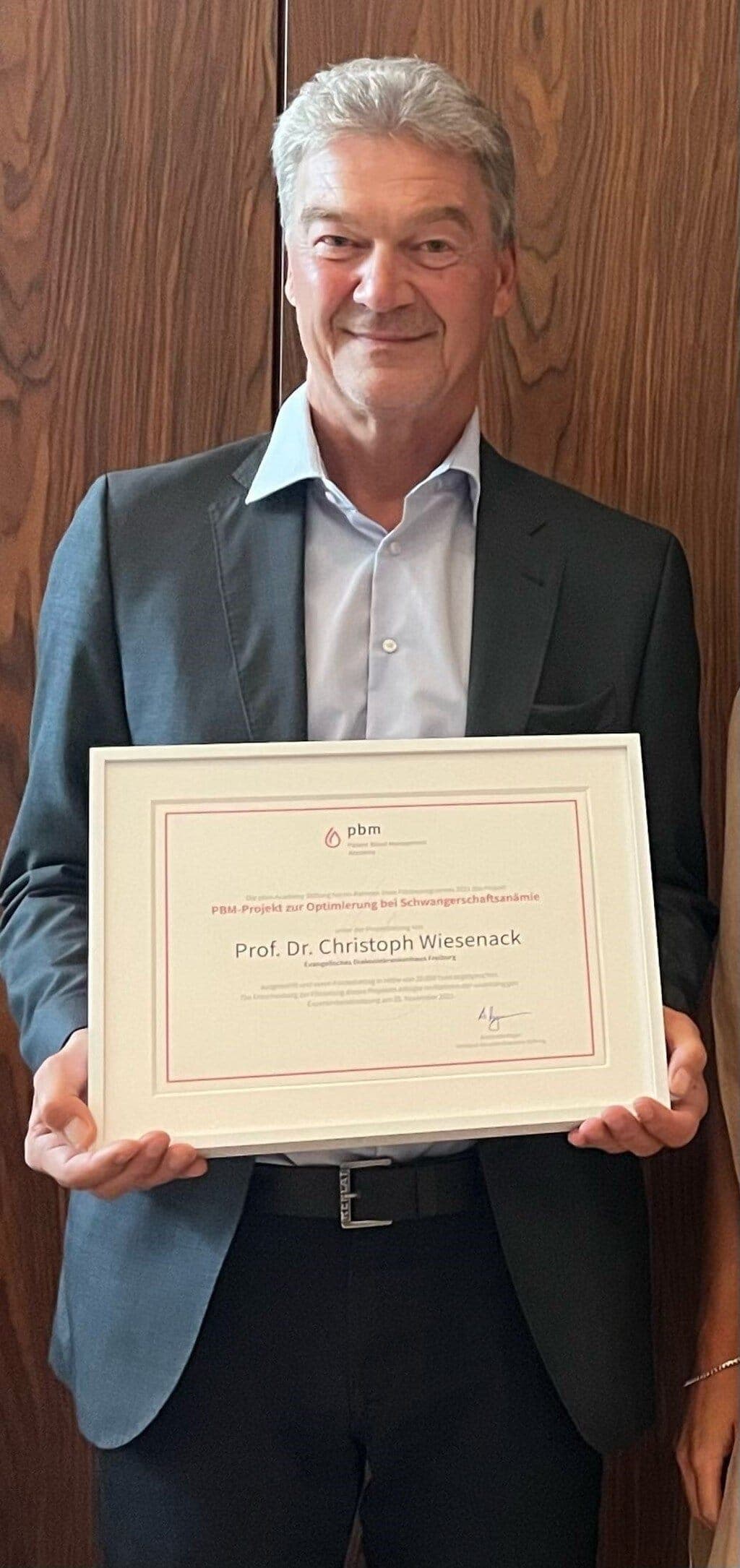
With “Don’t forget expectant mothers!”, the Evangelisches Diakoniekrankenhaus Freiburg, under the direction of Prof. Dr. Christoph Wiesenack, is launching a PBM project designed to improve the diagnosis of iron deficiency during pregnancy.
Last updated: